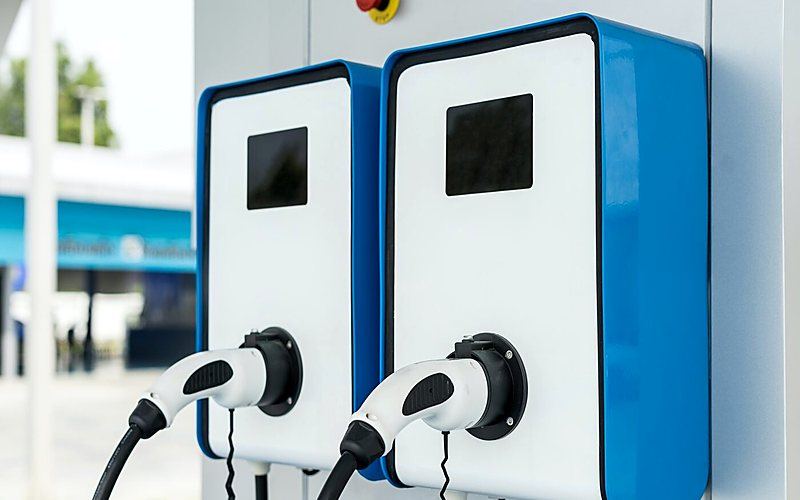
Florida Law Is Forcing the Issue
Florida Statutes 718.113 and 720.337 now prohibit condominium and homeowner associations from unreasonably restricting unit owners who want to install EV charging equipment in their parking spaces. For South Florida property managers, this isn't a future concern — it's today's reality. EV registrations in Miami-Dade County alone have more than doubled since 2022, and accommodation requests are landing on HOA desks every week.
The challenge isn't the law — it's logistics. How do you accommodate one resident's charging request without overloading the building's electrical panel? How do you bill residents fairly for the electricity they use? What happens when 40% of the building eventually wants to charge?
The Right Infrastructure Approach for Multi-Family Properties
The most cost-effective approach for South Florida's aging condo stock isn't to react to individual requests — it's to design a scalable EV infrastructure plan now that serves today's few EV drivers and tomorrow's many. MrRhinoConnect recommends a three-tier approach:
Tier 1 — Electrical Assessment: We evaluate your existing electrical service capacity, load profile, and available panel headroom. Most South Florida buildings built before 2010 were not designed with EV charging loads in mind. This assessment determines how many chargers you can add without a utility service upgrade — and what a managed upgrade path looks like when you need more.
Tier 2 — Smart Load Management: Rather than dedicating a full 40-amp circuit to each parking space, smart load management systems distribute available capacity dynamically across multiple chargers. A 200-amp electrical upgrade that would normally support 4–5 chargers can support 15–20 with proper load management software — dramatically reducing the cost per charging station.
Tier 3 — Networked Billing: Networked EV chargers track energy consumption per session and bill residents directly — either through a property app or a third-party EV network. This eliminates the HOA's role as energy reseller and keeps the accounting clean.
Available Incentives for South Florida Properties
The federal Alternative Fuel Vehicle Refueling Property Tax Credit (30C) allows commercial property owners to claim 30% of EV charging equipment and installation costs as a federal tax credit. Florida Properties also benefit from the state's sales tax exemption on EV charging equipment. Florida Power & Light's commercial programs offer additional rebates for qualifying multi-family EV infrastructure installations.
Combined, these incentives can offset 35–50% of a typical South Florida condo EV charging project — often bringing the net cost to under $2,000 per parking space for a properly designed system.
"The question for South Florida HOAs is no longer whether to install EV charging — it's how to do it in a way that serves the whole community fairly without creating runaway electrical costs." — MrRhinoConnect Engineering Team
What to Avoid
The most common mistake South Florida property managers make is approving individual unit owner installations without a master plan. Each independently-installed charger draws from a shared panel without coordination — and the first few chargers seem fine until the 8th one trips the breaker. Retroactive load management is far more expensive than designing it in from the start.
MrRhinoConnect designs EV infrastructure master plans for South Florida multi-family properties of every size — from 20-unit boutique condos in Coral Gables to 400-unit towers in Brickell. Our plans protect property managers legally, satisfy today's residents, and scale to accommodate the EV adoption rates that are coming regardless.
Learn More: EV Charging Stations →
Ready to Upgrade Your South Florida Property?
MrRhinoConnect delivers expert technology solutions across Miami-Dade, Broward, and Palm Beach counties.
Get a Free Consultation